When a Large Tree Becomes a Risk to Your House: Reading the Warning Signs
July 24, 2026
Sinkhole Risk: What Is Real vs. What Is Exaggerated
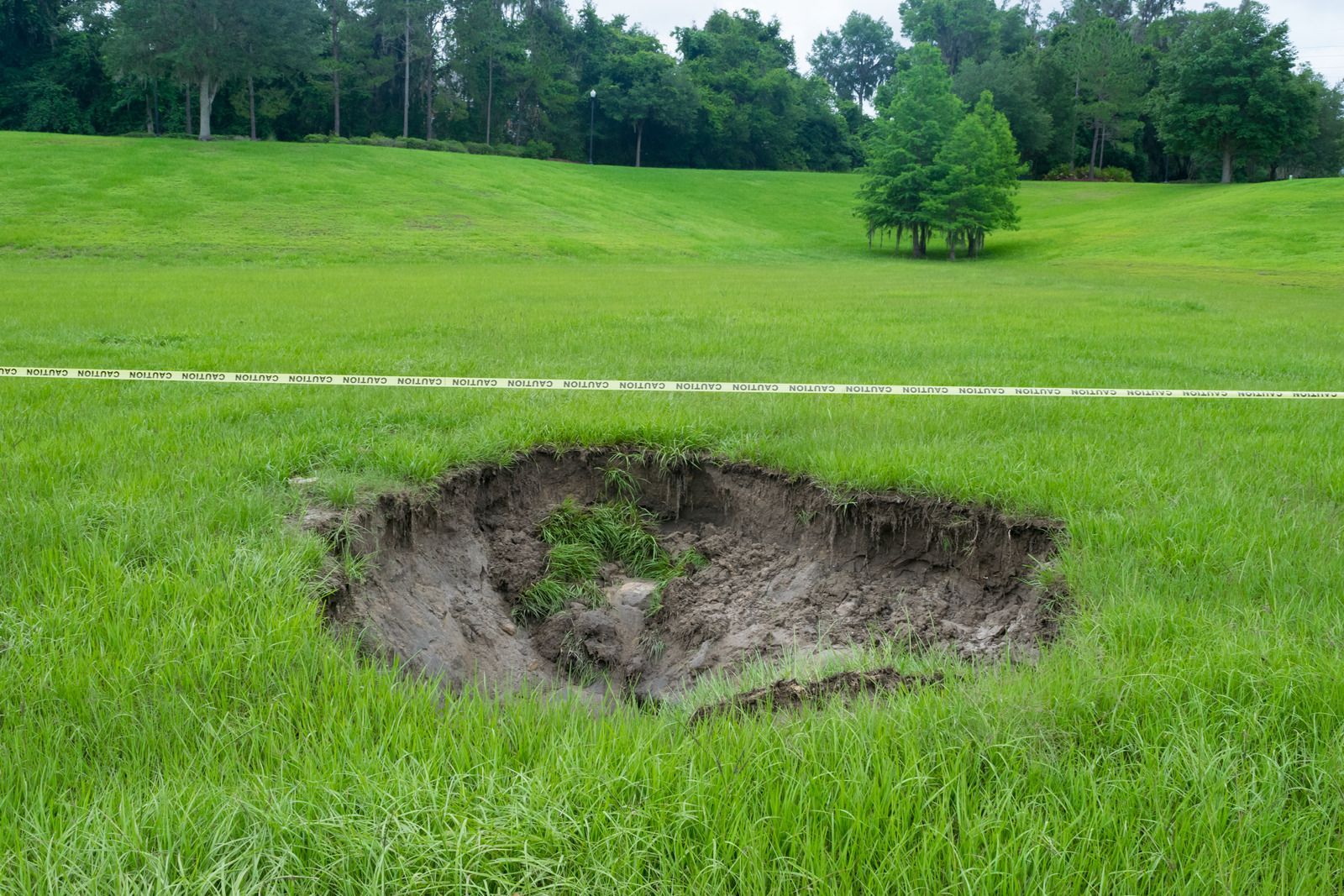
True sinkholes, the kind that open suddenly and swallow objects, are almost exclusively associated with dissolution of limestone bedrock, not root decay. Covington sits on glacial outwash soils over clay and till. There is no karst geology here. What homeowners call sinkholes in this context are soil subsidence events, which are real but predictable and manageable.
What you are actually seeing is a collapse of the loose, void-rich soil layer that formed as roots decomposed. These depressions are almost always 4 to 18 inches deep and 12 to 36 inches wide. They form gradually over weeks to months, rarely overnight, and they give visible warning signs before they become a tripping hazard.
The highest-risk zones are where multiple large roots converged, typically within 4 to 6 feet of the original stump center, and where roots ran under hardscape like walkways or driveways. A root decaying beneath a concrete path cannot be seen from the surface, but the path will begin to crack and rock in a linear pattern following the root's path once enough void space opens beneath it.
| What You're Seeing | Most Likely Cause | Severity | First Step |
|---|---|---|---|
| Circular depression in lawn, 1 to 3 inches deep | Surface root decomposition void | Low | Fill with topsoil and compact lightly, monitor for recurrence |
| Soft spongy soil over a 3 to 6 foot area | Large root mass actively decomposing | Medium | Probe depth before filling, avoid heavy equipment over zone |
| Cracking walkway in a linear pattern | Root decomposing beneath hardscape | Medium | Mark crack pattern and monitor rate of change over 30 days |
| Depression forming near foundation | Root channel directing water toward structure | High | Do not fill. Have a professional assess drainage and structural fill |
| Yellowing grass in a ring pattern | Decaying roots consuming nitrogen as they break down | Low | Apply balanced slow-release fertilizer to affected turf |
| Soil settlement under fence post | Root running beneath post base | Medium | Check post stability and repack base if more than 1 inch of lean |
| Standing water in former stump zone | Grind cavity collecting runoff without root uptake | Low | Fill cavity to grade with topsoil and compact in 2-inch lifts |
| Repeated depression in same spot after filling | Large structural root still decomposing at depth | Medium | Allow full decomposition cycle before final grade, 2 to 4 year window |
QUICK ANSWER: A large tree becomes a risk to your house when three things line up: the tree can fail, the site pushes it toward failing, and your home sits inside the fall zone. Watch for a new or worsening lean, cracks in the trunk, soil lifting or cracking near the base, mushrooms or conks at the roots, and a thinning canopy. In the south Puget Sound, saturated winter soil and windstorms make tall conifers like Douglas fir more prone to blowing over, sometimes before the crown shows any problem. A falling tree can reach almost anything within a distance equal to its height. If a big tree stands within that range of your roof, a certified arborist can judge the real risk with an on-site inspection.
You hear it before you see it. A gust rolls off the Sound, the top of that big Douglas fir sways past your roofline, and something in your chest tightens. Most of the year you barely notice the tree. Then a November storm blows through, the ground is soaked, and you find yourself doing math about how much of your house sits under it.
That worry is worth taking seriously, but it doesn't have to turn into panic. Not every tall tree near a home is dangerous, and plenty of towering firs stand for decades without trouble. The trick is knowing what actually turns a healthy shade tree into a genuine hazard, and what to look for from the ground before the wind does the looking for you.
What Makes a Big Tree a Risk in the First Place
A tree by itself isn't a hazard. It becomes one when it can fail, when the site works against it, and when something valuable sits in the way. Arborists borrow this idea from the International Society of Arboriculture: a hazard tree is one with a real chance of failure, growing where conditions add stress, with a target close enough to be hit. Take away the target and even a rotten tree is just habitat for woodpeckers.
Your house is the target that changes everything. A dead fir at the back of a five-acre lot is a wildlife snag. The same tree twenty feet off your bedroom wall is a different conversation. So the first question isn't "is this tree perfect," because no old tree is. The question is whether a failure would land on people, your roof, the driveway, or the power line running to the house.
Failure comes in a few shapes. A whole tree can uproot and go over. A large limb can tear out of the canopy. The trunk can snap partway up. Each one carries a different weight and a different reach, and a mature conifer near a home can produce all three. That's why size matters so much. A small ornamental dropping a branch is a cleanup job. A hundred-foot fir letting go at the root plate is a structural event.
The Warning Signs You Can See From the Ground
You don't need to climb anything to spot most trouble. A slow walk around the base of the tree, done in daylight after a storm, tells you a lot. Look at the trunk, the ground, and the canopy, in that order.
A lean that's new or getting worse
Plenty of trees lean and have leaned safely for years, so a lean by itself isn't a verdict. What matters is change. Alabama's Cooperative Extension, working from ISA guidance, calls a rapidly worsening lean a warning sign of coming failure. If the tree used to stand straighter, or if it leans more after each big blow, treat that seriously.
Soil that's cracked or lifting near the base
This is the one people overlook, and it might be the loudest. When roots start pulling free, the ground on the side opposite the lean can crack, mound, or heave up like a cracked sidewalk. A gap opening between the trunk flare and the soil is the same story. That's the root plate beginning to move, and it usually shows before the tree goes.
Cracks in the trunk
Not all cracks are equal. A crack running the long way up the stem is a doorway for decay, but a crack running crosswise, around the trunk, is the dangerous kind. The Extension guide flags these traverse cracks as especially serious because they cut straight across the wood fibers that hold the tree up.
Mushrooms, conks, or a hollow-sounding base
Fungal fruiting bodies at the root flare, soft or crumbling wood, old cavities, sap weeping through the bark, carpenter ants streaming in and out. Any of these points to decay in the wood or roots. You won't always see it, and a tree can rot inside while looking sound outside, which is exactly why the ground-level clues at the base matter so much.
A thinning or off-color crown
Look up. Yellowing needles, a canopy that's gone thin and sparse, a sudden heavy crop of small cones, or big dead branches held up in the top all suggest the tree is struggling. WSU lists thinning, yellowing, and a distress crop of cones among the crown symptoms of a fir losing its roots. Dead limbs over a roof are their own hazard even on an otherwise healthy tree, since brittle wood snaps first in wind.
TIP: Walk your biggest trees the morning after the first real windstorm of the season, usually sometime in November here. Fresh soil cracks, a new lean, or limbs hung up in the canopy show up most clearly right after the wind has tested the tree.
How Far Can the Tree Actually Reach
Distance from the house is doing more work than people realize. A tree that fails reaches out to roughly its own height, so a tall fir doesn't have to be growing against the wall to land on it. Picture the tree lying flat in every direction and see what falls inside that circle: the roof, the kids' room, the car, the line feeding power to the house.
Lean tilts the odds toward whatever the crown points at, but wind has the final say and doesn't always cooperate. A saturated-soil uprooting can drop a tree in a direction its lean never suggested. That's why arborists weigh the whole setup, not just the angle of the trunk. Two firs the same size can carry very different risk depending on which way they'd go and what waits underneath.
There's also the slow, grinding kind of damage that never makes the news. Big roots from a fir or maple can lift a driveway, crack a walkway, or push into drain lines over the years. It's not the dramatic storm failure, but it's real, and it's part of why a large tree crowding the foundation deserves a professional eye even when it looks perfectly healthy.
WARNING: If you see fresh soil heaving, a trunk that has visibly shifted, or a large tree resting against another after a storm, keep people and cars out of the fall zone and get a professional assessment before anyone works near it. A partly uprooted or hung-up tree can move without warning, and it is not a safe thing to poke at yourself.
When to Bring in a Pro, and What They Look At
There's a point where eyeballing it stops being enough. If you've spotted any of the ground-level signs, or if a big tree simply stands close enough to reach the house, an on-site assessment answers the question you can't answer from the porch: is this tree actually likely to fail, and if it did, what would it hit.
Certified arborists work in levels, and knowing them helps you understand what you're getting. A Level 1 check is a quick visual look for obvious defects. A Level 2 assessment is the common one for a worried homeowner, where an arborist walks the whole tree, checks the trunk, roots, branches, and crown from every side, and sounds the wood for hidden decay. A Level 3 evaluation brings in specialized tools for a deeper look when something in the basic check raises a flag. Most home situations get answered at Level 2.
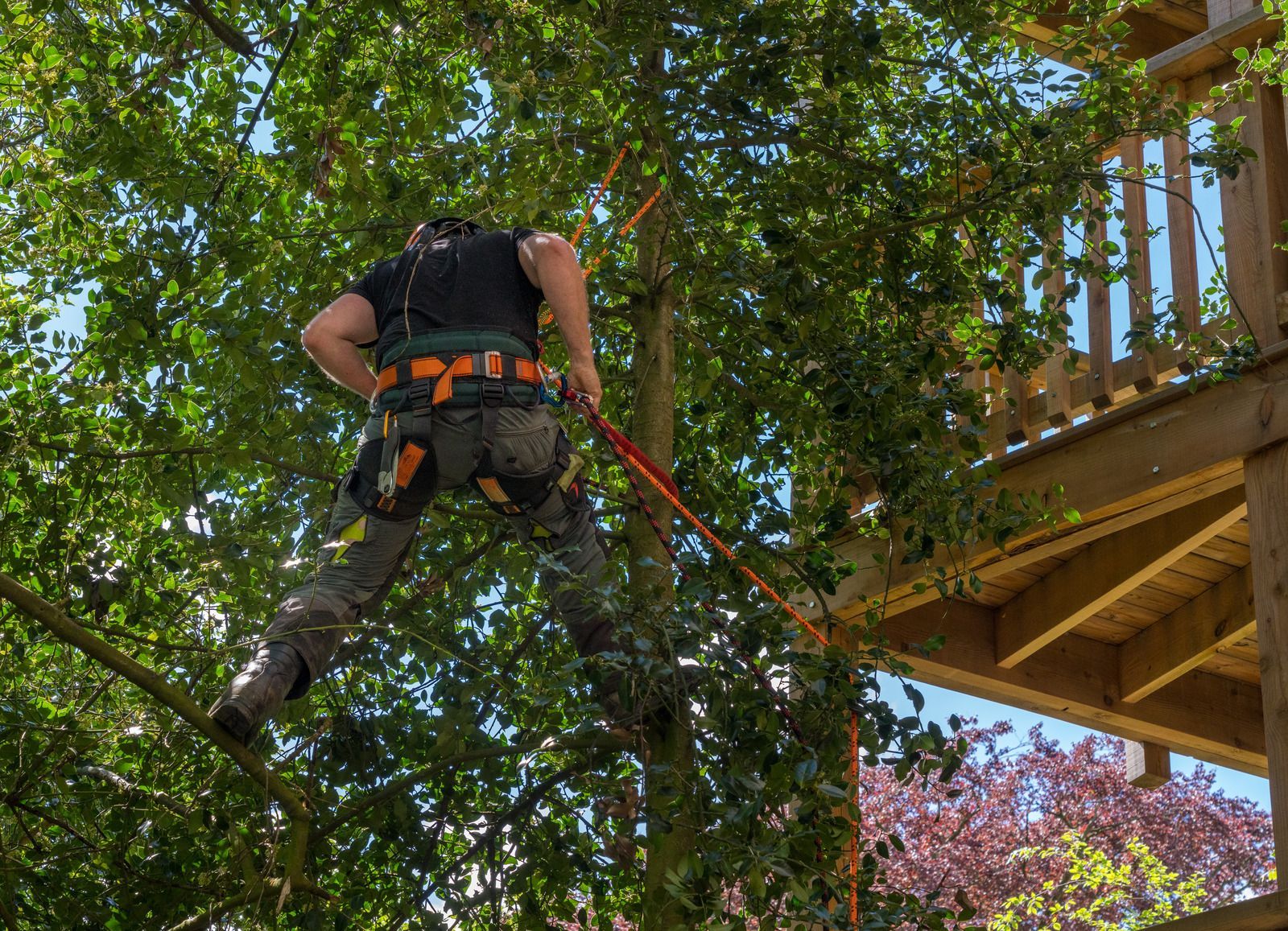
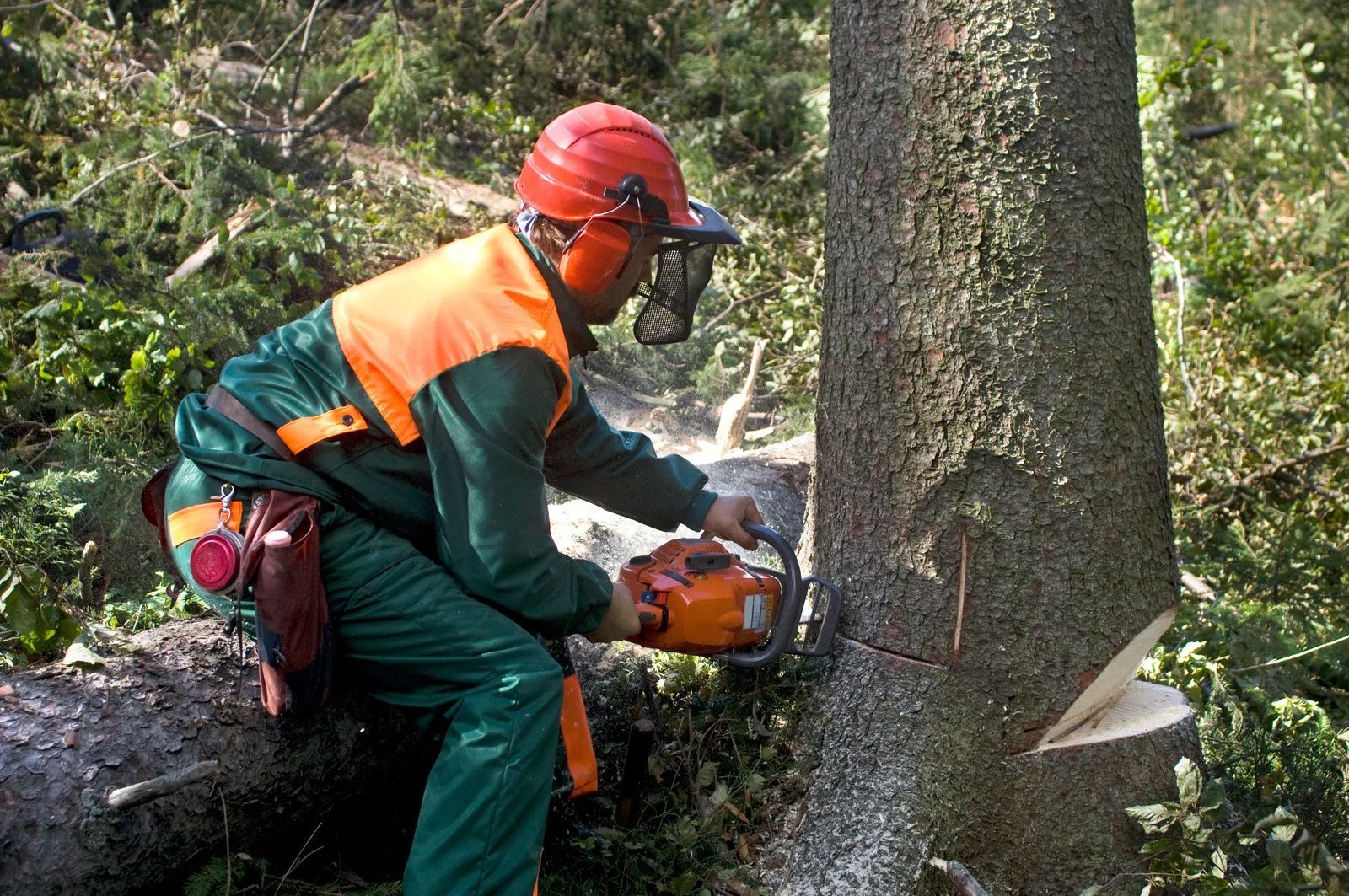
A good assessment doesn't always end in removal. Sometimes the honest answer is that the tree is sound and you can stop losing sleep. Sometimes a heavy limb over the roof can be reduced, or a structurally weak union can be supported with cabling so the tree stays and the risk drops. And sometimes the tree really does need to come out, in which case a big conifer near a house is taken down in careful sections rather than felled in one piece, so nothing lands where it shouldn't. The point of the visit is to match the work to the actual risk, not to assume the worst.
Frequently Asked Questions
How do I know if a large tree is a risk to my house?
Check if your home sits within the tree's reach — roughly its height. Watch for a growing lean, cracked soil at the base, trunk cracks, root decay, or a thinning crown over the roof. An arborist weighs failure risk against impact.
Can a healthy-looking Douglas fir still fall?
Yes. Root diseases like laminated root rot attack anchoring roots first, and infected firs often blow over before the crown shows symptoms. A tree can look full and green right up until a windstorm on soaked ground topples it.
Does a leaning tree always need to come down?
No. Many trees lean safely for years. What matters is change — a lean that grows after storms, paired with soil cracking or heaving uphill. A steady, long-standing lean with firm ground is less concerning than a fresh one.
Why do trees fall more during Pacific Northwest winters?
Winter soaks the ground for months, and wet soil holds roots far less firmly than dry summer soil. Add a windstorm on a tall conifer, and the root plate can lever up. Firs weakened by root rot go first.
How close to my house is too close for a big conifer?
The rough rule is the tree's height. If a mature fir stands closer than it is tall, your home sits inside its fall zone. That doesn't mean danger automatically, but it earns closer attention and any sign of trouble.
What is a tree risk assessment and when should I get one?
It's an on-site inspection where a certified arborist judges failure likelihood and potential impact. A Level 2 assessment covers trunk, roots, branches, and crown, checking for hidden decay. Get one after warning signs, storms, or trees within reach of your house.
Living With the Big Trees Around You
The tall trees are part of why this corner of Washington looks the way it does, and most of them are worth keeping. The goal isn't to fear every fir on the block. It's to know your trees well enough to catch the ground shifting, the lean growing, or the crown thinning while there's still time to act. Walk your property after the next big wind, keep an eye on the ones close to the house, and when something looks off, get a real answer before the next storm asks the question for you.
That's the judgment call worth having a professional make with you, not against you. Based in Covington, Washington, Ivan's Tree Removal Services
brings 30
years of experience to every inspection — from cabling and bracing to careful sectional removal. If that fir near your roof has been on your mind, an on-site
tree risk assessment
is the clearest way to find out whether it's sound, treatable, or ready to come down.